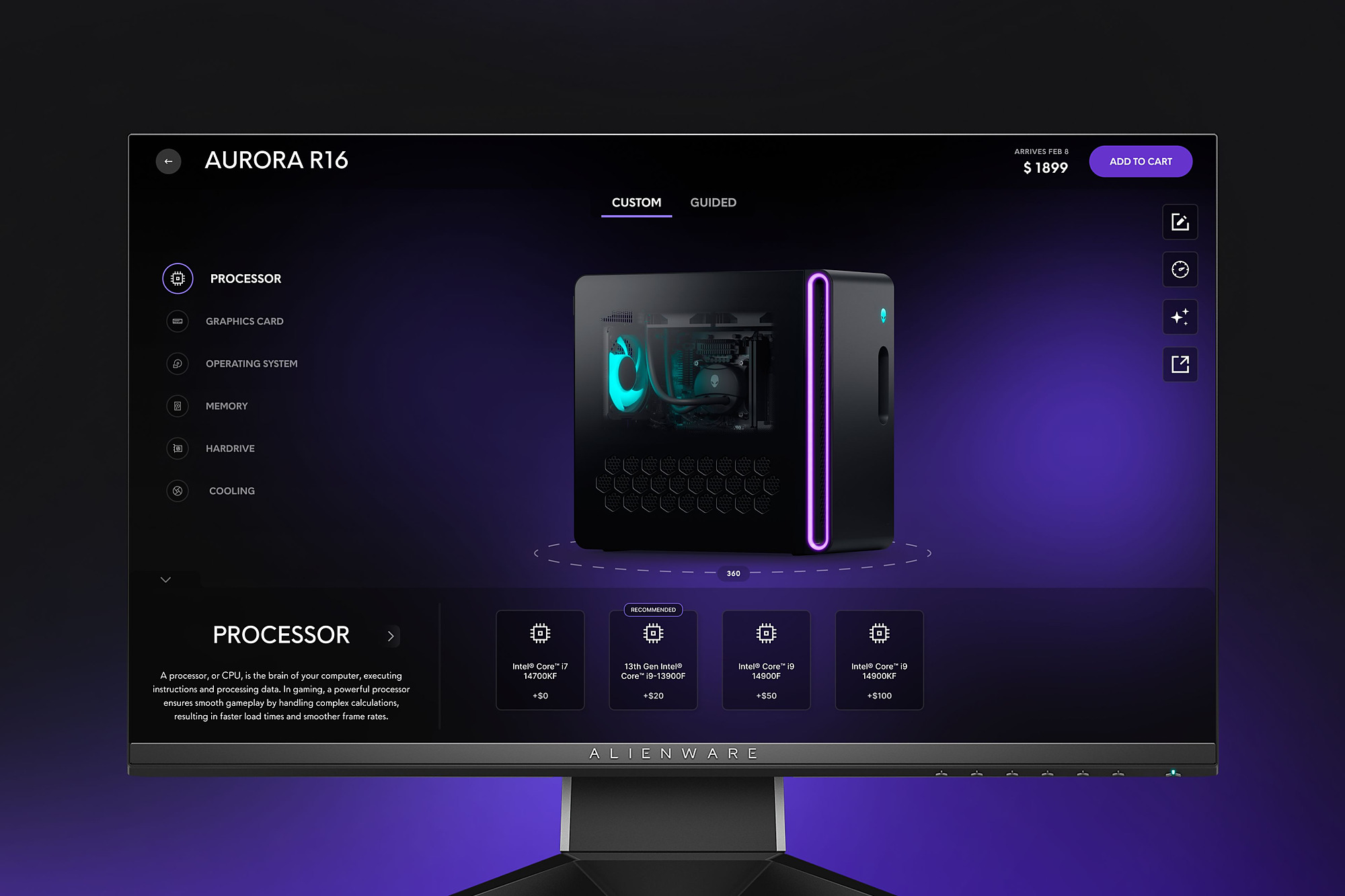
Alienware Configurator Experience
A forward looking concept for how gamers build their next PC
Alienware's Configurator Experience is crafted specifically for gamers, offering a detailed and tailored journey that allows users to fine-tune their systems to suit their playstyle. The platform is intuitive, offering flexibility in customizing everything from performance components to aesthetic features, ensuring each gaming rig meets individual customer needs while remaining easy to navigate.
Building Without a Home Base
Before this project, Alienware.com didn't have its own configurator. Anyone who wanted to build a system got redirected out to Dell.com's general configuration experience. This concept sat alongside real, shippable work, we also took Dell.com's configurator and used its building blocks to shape an MVP for Alienware, so it wasn't happening in a vacuum.
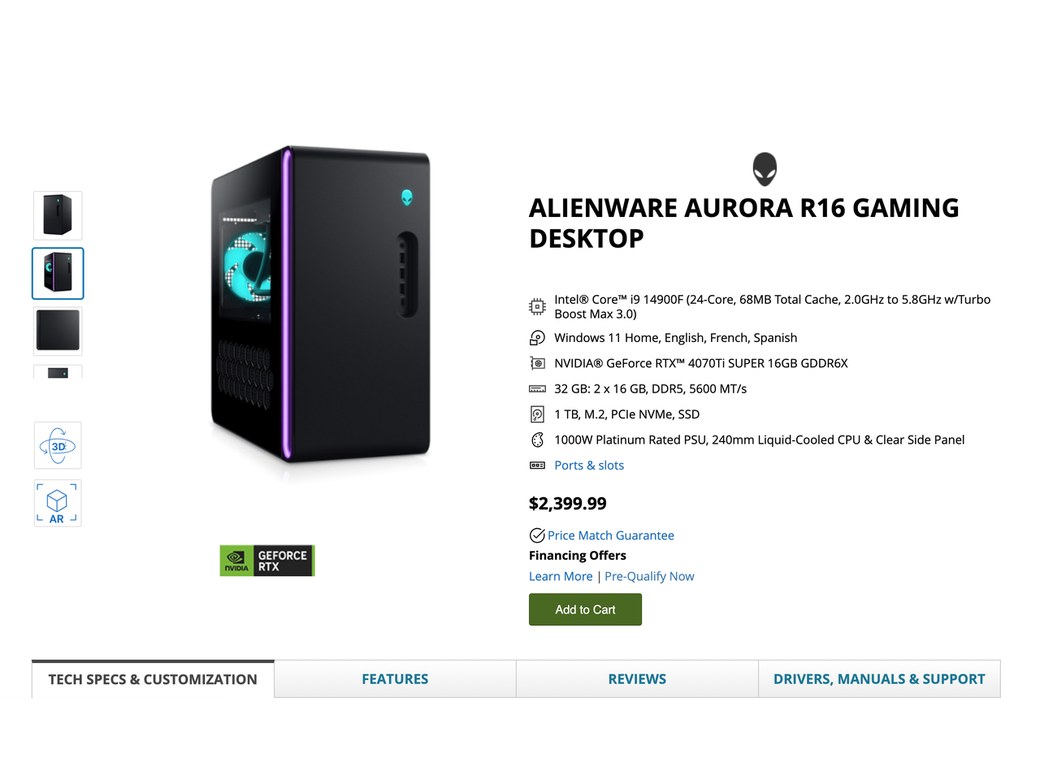
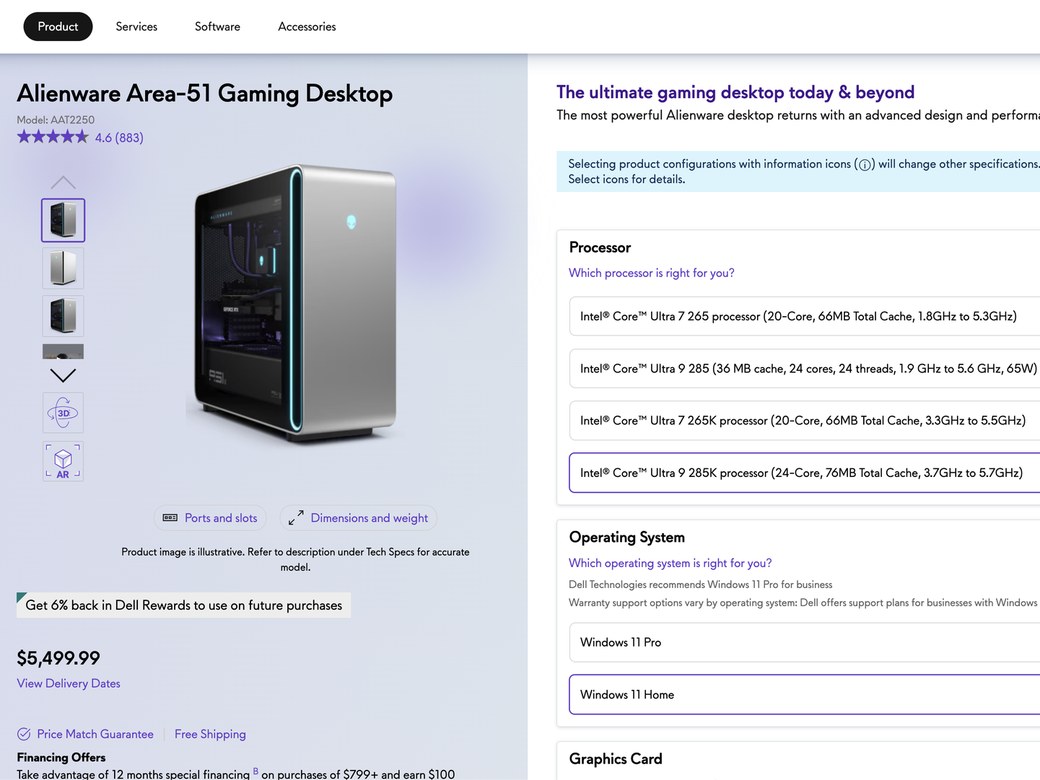
The harder problem was figuring out who we were actually designing for, and it wasn't a neutral question. Casual gamers hit choice paralysis fast, tripped up by jargon like teraflops or PCIe Gen 4 before they'd even gotten to a decision. Hardcore gamers had the opposite fear, that we'd hand them an oversimplified, black box configuration that hid the details they actually wanted control over. Our actual buyer base skews toward the hardcore side, people who already know their hardware well, which raised the stakes on getting this right. Simplify too much and we'd risk talking down to the customers who trusted us the most and generated the most revenue. I pushed for a lot of iteration and competitive analysis before we settled on a version of simple that wouldn't read as condescending to them.
All of it had to come together in about three to four weeks, the window we had to get this ready for the awards submission.
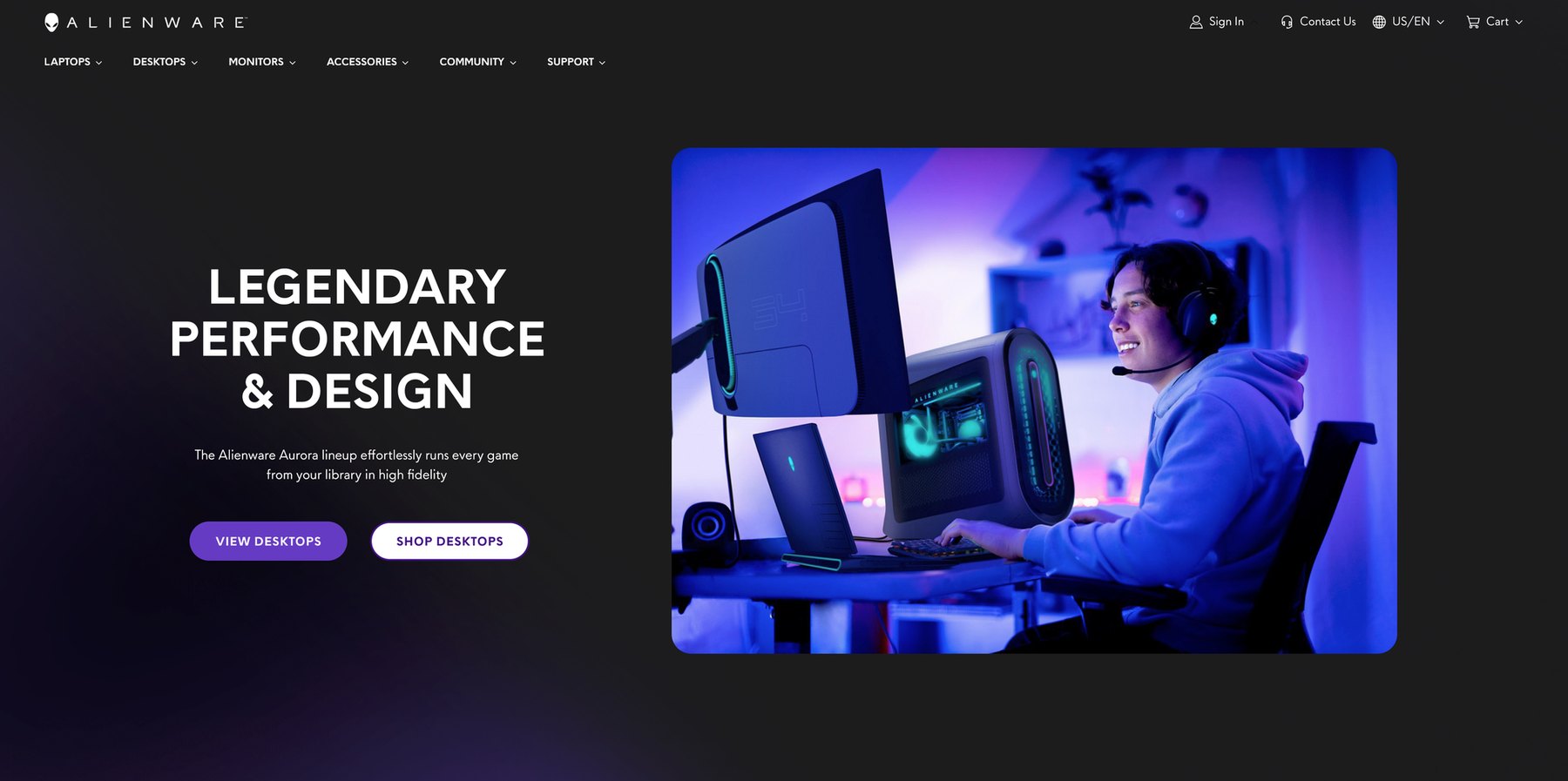
Same Goal, Different Path
Both types of gamer wanted the same underlying thing, to play the games they love. What differed was how each of them approached getting there, and that distinction is what I used to justify splitting the experience instead of forcing one flow to serve both.
A casual gamer's starting thought put the outcome first, something like "I want an Alienware that will let me play this game." For them the hardware was just a means to an end, a vehicle to get to the games they actually cared about. A hardcore gamer's starting thought put the experience first, closer to "what are the exact specs and aesthetics I get to tweak?" For them the hardware wasn't just a means to an end. It was part of their gaming identity, a hobby in its own right, down to the CPU, GPU, thermals, and even the RGB lighting.
Same destination, different relationship to the journey. That's what let us design two different doors into one configurator, instead of forcing both groups through a single compromise. Compromise designs tend to satisfy no one. Go too simple and hardcore gamers leave feeling the brand lacks depth. Go too complex and casual gamers leave out of frustration, afraid of buying the wrong thing. Splitting the flow was the riskier call to defend on paper, one experience is always easier to justify than two, but it was the only version that didn't ask one group to subsidize the other's experience.
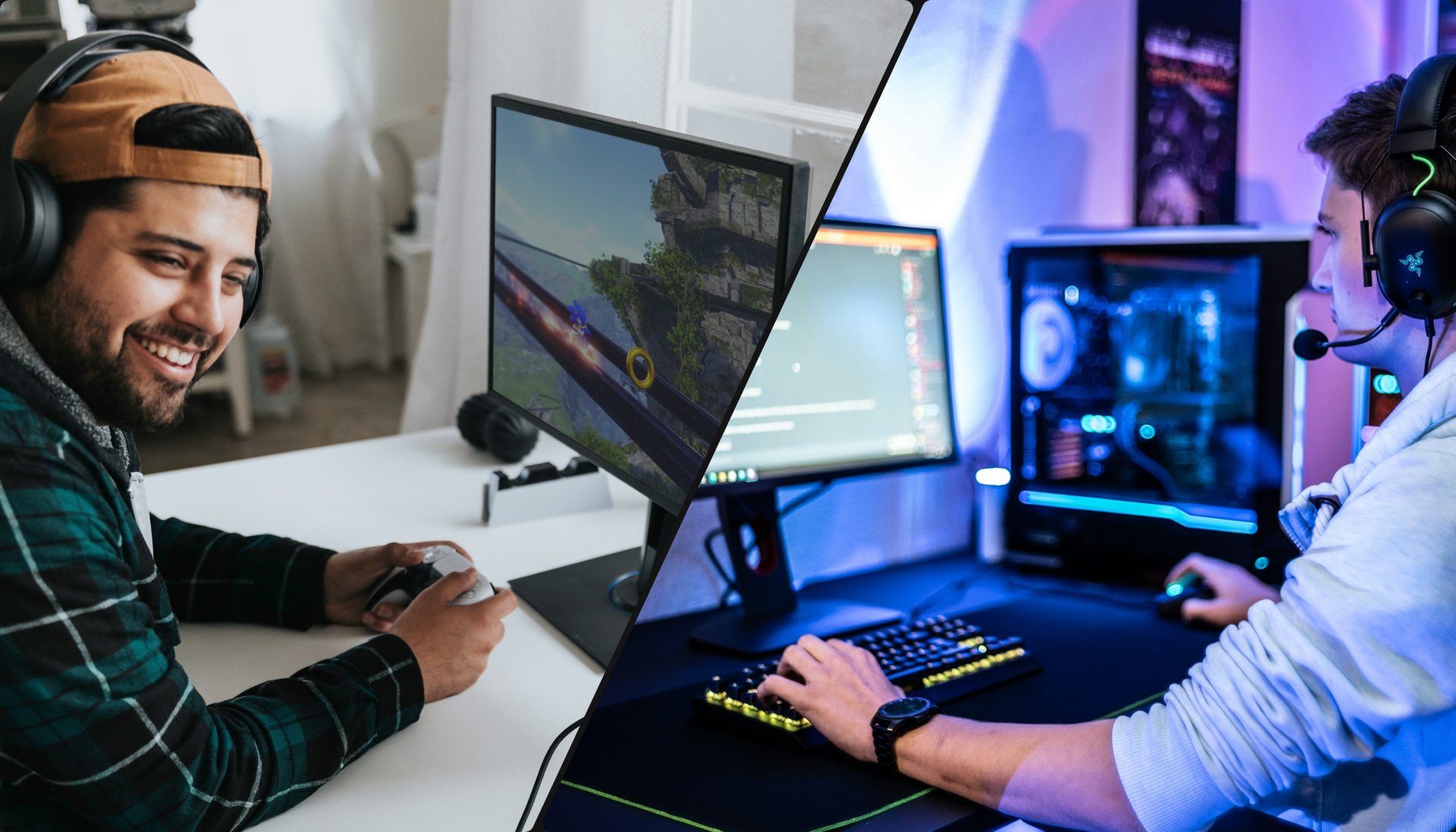
Two Doors, One Configurator
Two entry points, one configurator.
Help Me Choose
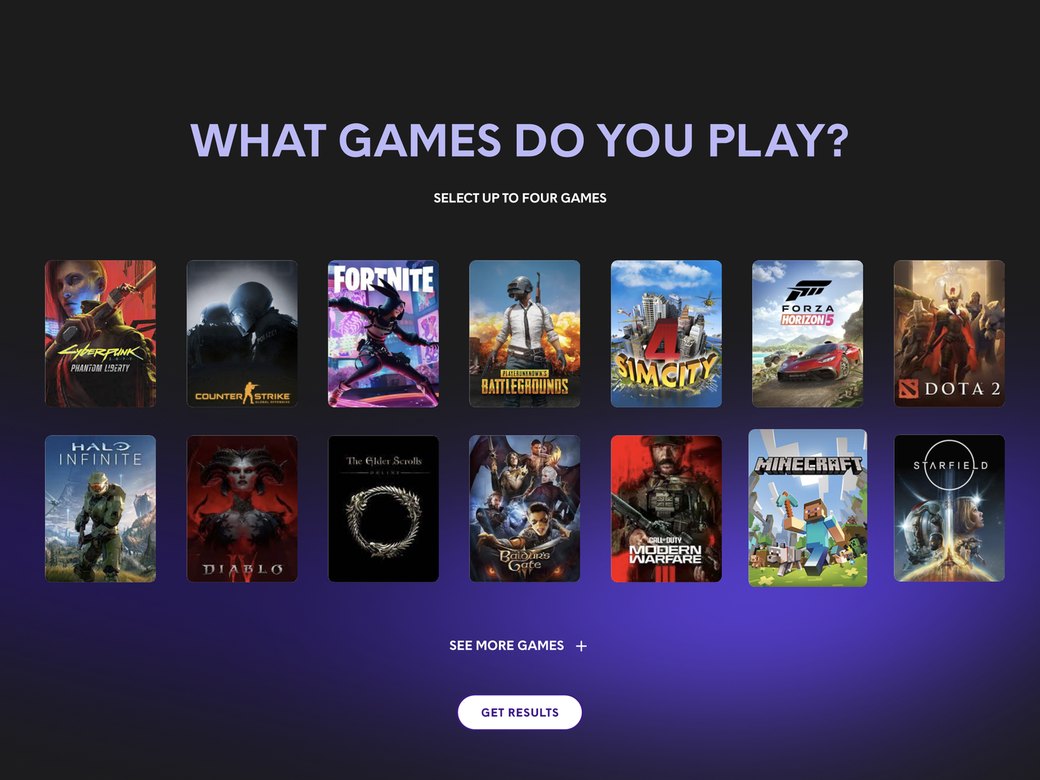
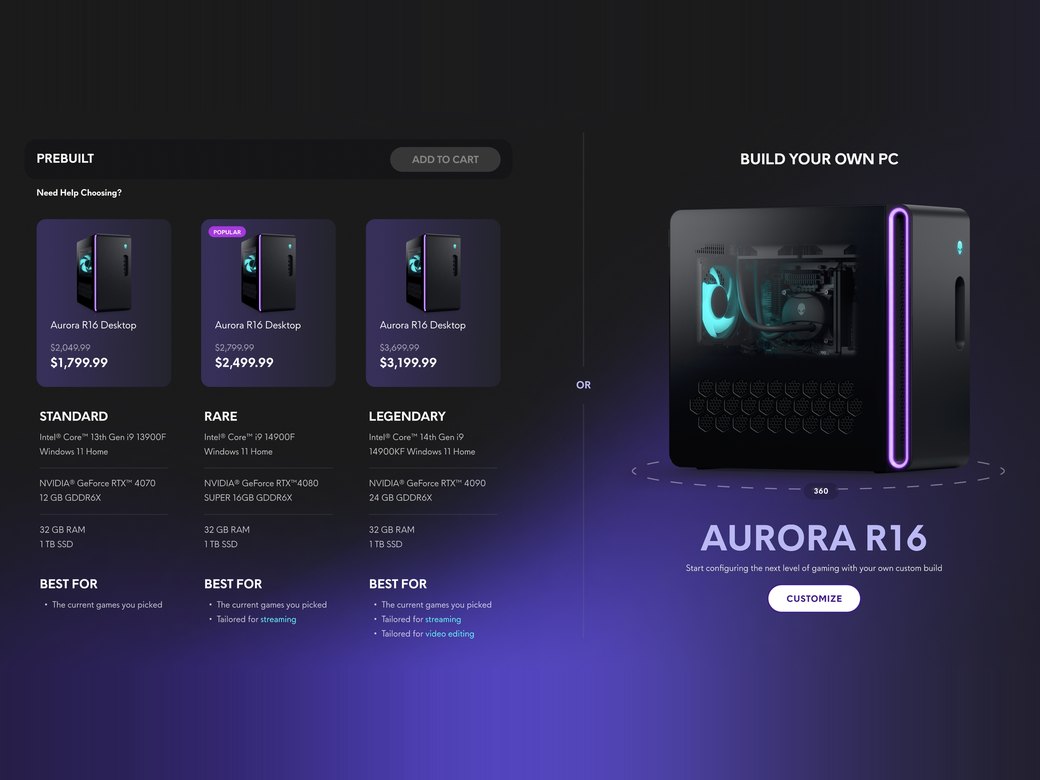
For casual gamers, a guided experience opening with a single question: "What type of games do you play?" It meets people where they already are, starting from the game instead of the spec sheet, and cuts down confusion and friction right at the top of the shopping journey.
Dynamic 3D Product Experience
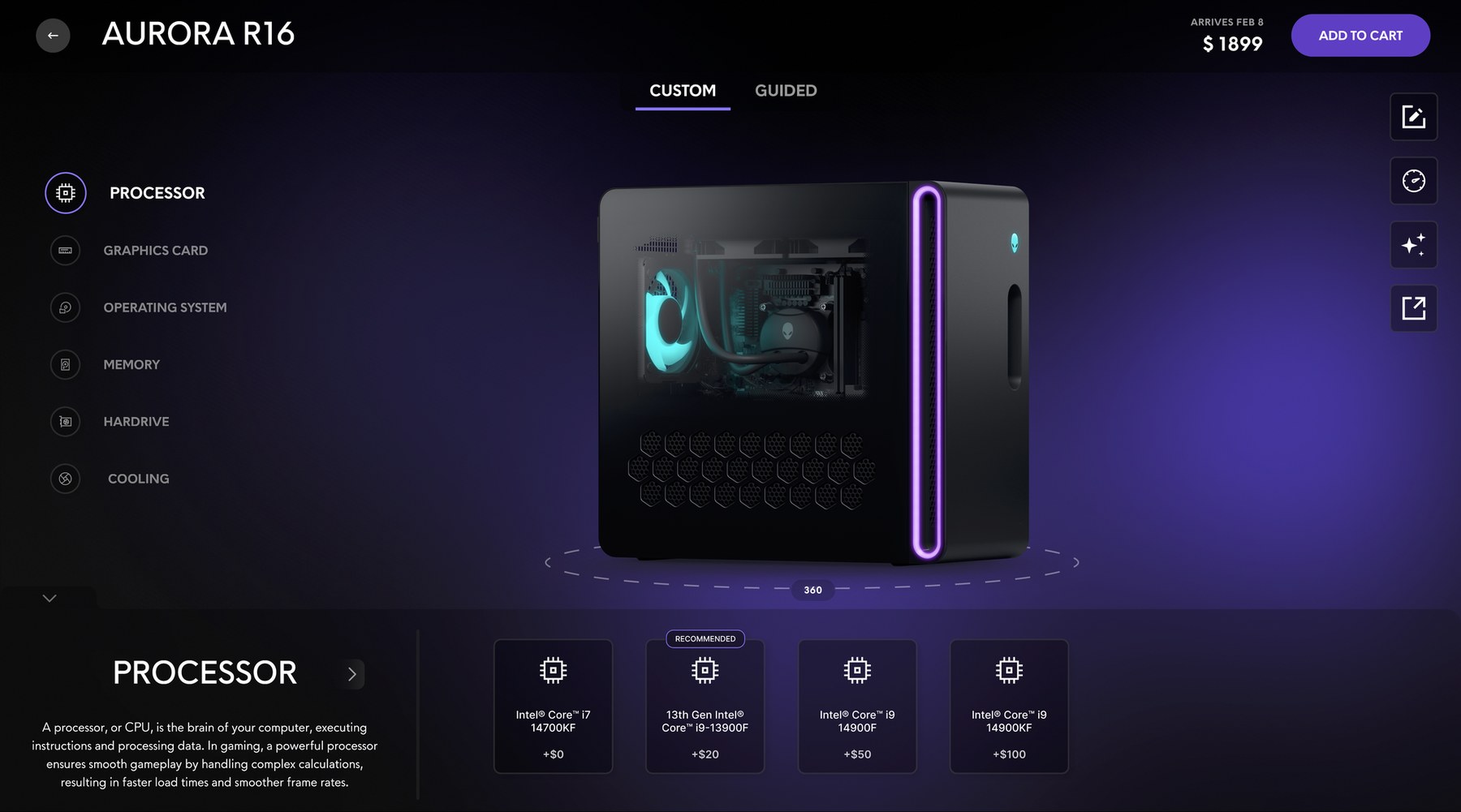
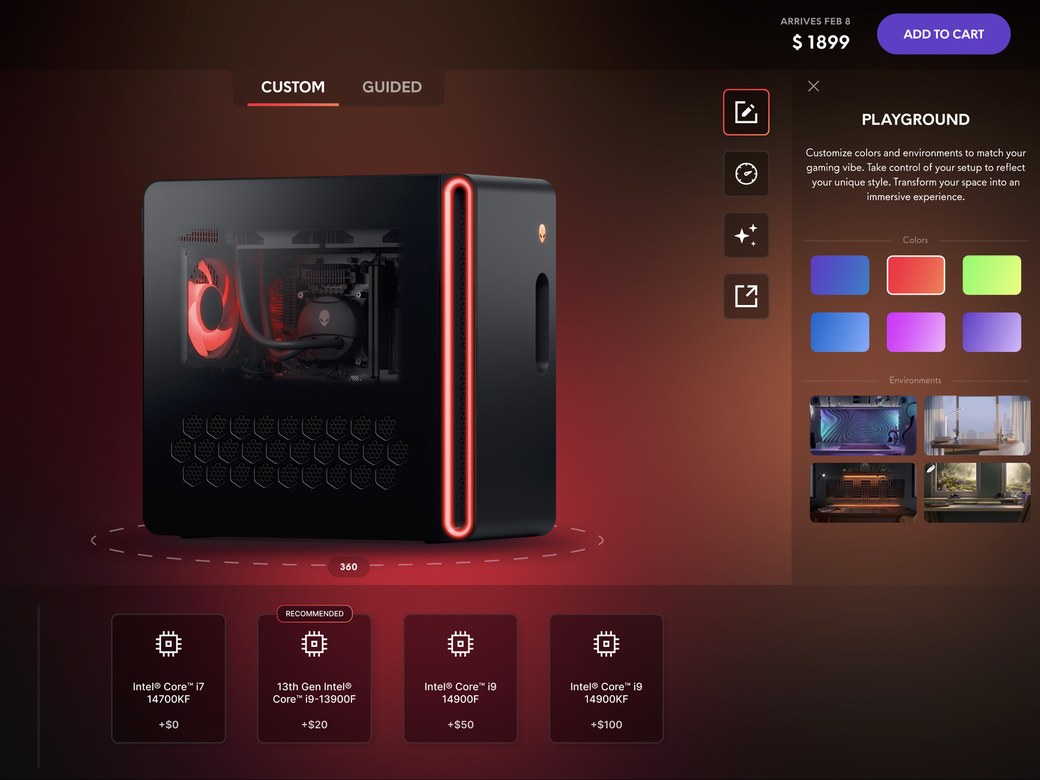
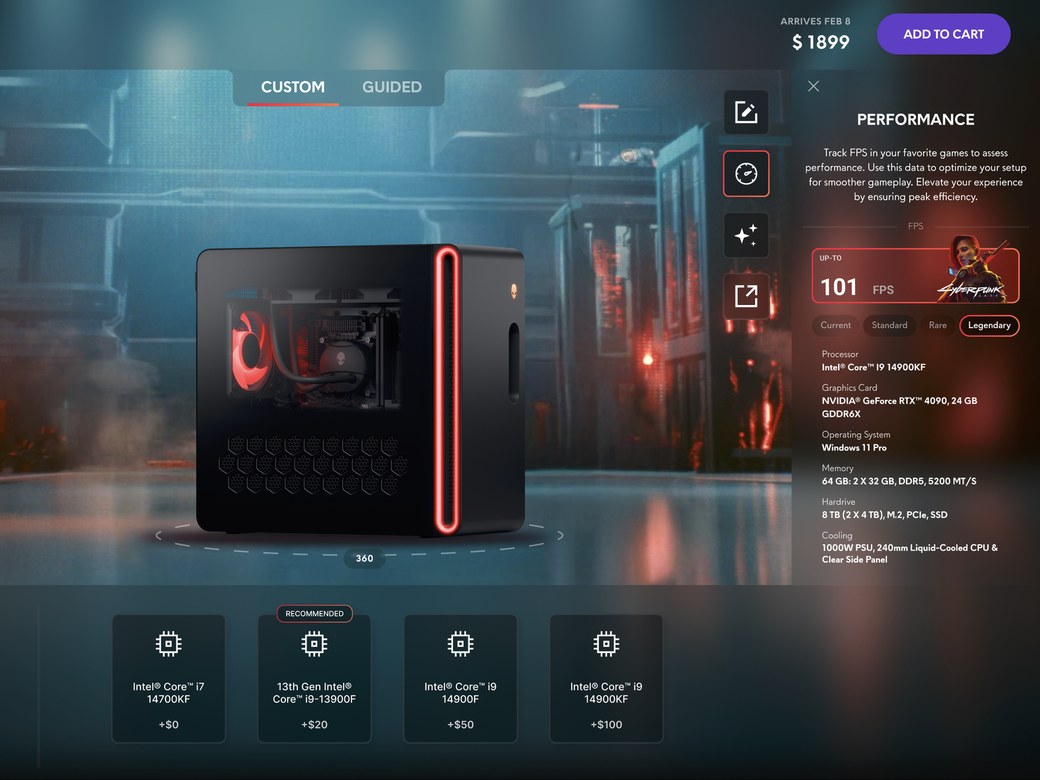
For hardcore gamers, a component first door instead, a granular menu that goes component by component through CPU, GPU, thermals, and RGB lighting, rendered in an immersive, gamified 3D view where every change updates in real time. This is where that experience focused mindset gets honored. Control and depth, presented as something worth engaging with, not just a spec list to scroll through.
Both doors pull from the same backend and the same inventory. The interface just changes shape depending on what someone walks in wanting, which meant the split cost us design and prototyping time, not a second product.
Where It Landed
The concept was named a 2025 finalist at the UX Design Awards, recognized in the Concept category, external validation that the two door approach read as more than just added complexity to people outside the project.

Just Getting Started
We see this as a first step, not a finished answer. Configuration is inherently complex, and helping customers fall in love with both the products and the games they play is an ongoing effort, one that has to keep adapting as customer needs, technology, and the products themselves evolve.
What I'd Carry Forward
What stayed with me from this project wasn't the configurator itself, it was what it took to defend designing for two audiences instead of one when the easier, more defensible path was picking a single flow and optimizing it.
Gaming moves fast, and what works now won't necessarily hold up five years out, taste changes quickly in an industry this aesthetically driven, so I've learned not to mistake the safest looking option for the right one.
That's also the nature of what we were designing for. The whole point of games is to keep getting more fun, look better, run better, feel better. It only makes sense that the design serving that industry has to keep moving the same way, and keep being willing to make the harder call when a simpler one would read fine on a slide but serve fewer people well.